Ivermectin
Ivermectin is a prescription-only antiparasitic used to treat the inflamed spots and pustules of rosacea by killing Demodex mites and calming inflammation.
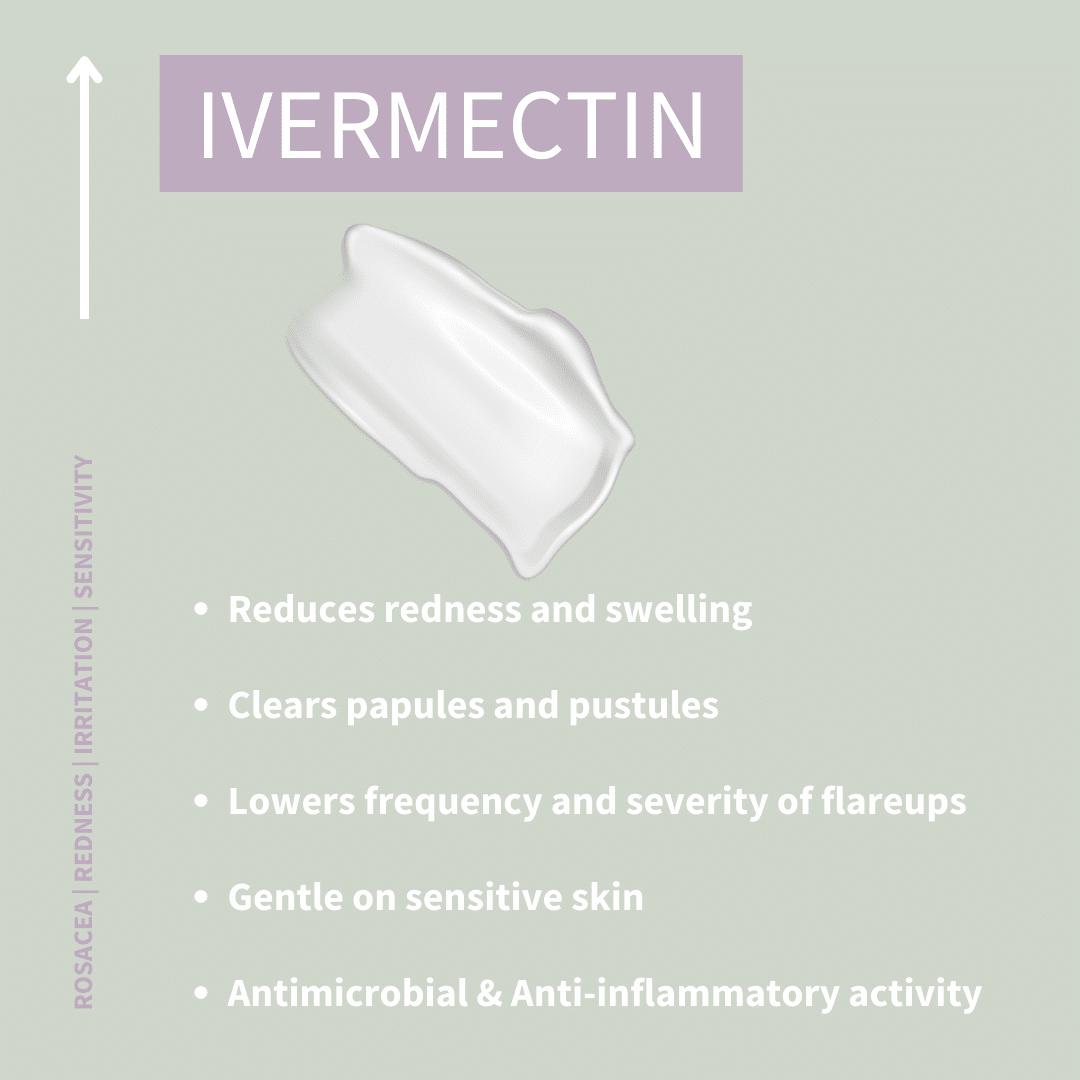
Ivermectin works by killing Demodex, the microscopic mites found in greater numbers on skin affected by rosacea, and by calming the inflammation around them. This settles the papules and pustules of papulopustular rosacea, and the redness that sits around them fades as they clear. In the UK, topical Ivermectin is available by prescription only. At City Skin Clinic, your doctor may prescribe Ivermectin alone or alongside other actives, in a cream or gel rosacea treatment, at a strength and protocol to suit your skin.
What Is Ivermectin and How Does It Work?
Ivermectin is a medicine that was initially developed to treat internal parasitic infections in human and veterinary medicine. It works by binding to the parasites’ nerve and muscle cells, which paralyses and eventually kills them. On the skin, it is also used to target Demodex. These are microscopic mites that live in the hair follicles and oil glands of most adult skin. They usually do not cause any problems but are thought to trigger inflammation in rosacea skin. Ivermectin also damps down the inflammatory signals the skin releases. As such, topical Ivermectin is thought to be beneficial in rosacea due to its antiparasitic and anti-inflammatory actions. This may help with:
- Papules and pustules: the raised, inflamed spots of rosacea, which clear as both the mites and the inflammation come down.
- The redness around active spots: as lesions settle, so does the inflammation surrounding them.
- Rosacea that keeps returning: it is used over a course rather than as a short burst, and your doctor reviews how your skin has responded before the next one.
Topical Ivermectin does not treat ocular rosacea, which is the eye involvement some people get alongside skin symptoms. Tell your doctor if your eyes are affected, because that needs looking after separately.
How City Skin Clinic Uses Ivermectin
We use Ivermectin in our rosacea treatments for suitable patients as part of a custom cream or a gel formula. Your doctor will select the strength and any additional actives to suit your skin and type of rosacea. They can also design the rosacea formula to address any additional skin concerns like hyperpigmentation, melasma, early signs of skin ageing or acne. Your doctor may pair Ivermectin with one or more of the following based on your needs:
- Metronidazole: the other prescription rosacea active we may use. It is an antibiotic which can also reduce inflammation.
- Azelaic acid: calms the inflammation behind rosacea and clears spots.
- Niacinamide: supports the skin barrier and reduces redness.
- Tretinoin: added where there are lines, texture or pigmentation to treat alongside rosacea.
When each course finishes, the same doctor reviews how your skin has responded and adjusts your next formula accordingly.
How Do You Get Ivermectin for Rosacea in the UK?
In the UK, topical Ivermectin is available by prescription only, so you will not find it over the counter. That leaves two routes, and which one suits you depends on whether a fixed formula with a single active is enough for your skin. The only licensed topical Ivermectin in the UK is Soolantra 10 mg/g cream, from Galderma. It is licensed for treating the inflammatory lesions of rosacea in adults. It comes in one strength (1%) and one cream base with Ivermectin as the only active in it. A compounded formula is the second route. These are unlicensed prescription treatments made individually for each patient by a specialist pharmacy. Your doctor can select the strength, combine it with other actives and formulate it in a cream or gel. This allows customisation of a treatment that can cover more than one concern.
For completion, Ivermectin is also licensed as 3 mg tablets for treating intestinal and other parasitic infections rather than for the skin. We treat skin with topical formulas only, so we do not use oral Ivermectin.
To access our custom skin treatments, you will need to complete the online consultation form or book a virtual video consultation with one of our doctors first. Your doctor will assess your skin, design a formula around what it needs and look after you afterwards. The same doctor stays with you, adjusts the treatment course by course and answers your questions by email.
Personalised Treatment Fees (3 Month Supply)
VIRTUAL CONSULTATION£30
Your doctor designs your treatment and looks after you throughout. Consultation fee credited in full against your first treatment.
PERSONALISED SKIN TREATMENT£90-150
A 3-month supply of your compounded cream or gel, when used on the face. £90 for a once-daily formula and £150 for a twice-daily treatment. Delivery and your doctor's ongoing aftercare included.

Treatment Time
15 Minutes

Duration of effect
3-4 Months

Back to Work
Same Day
There is no subscription and no auto-renewal. Each course is a single order you place yourself.
Soolantra or Compounded Ivermectin
If you are considering Ivermectin, you have two routes in front of you. You can be prescribed the licensed cream Soolantra or have a formula compounded and made for you. Which one suits you depends on your skin, what else you are treating and whether a single active is enough.
| Soolantra | Compounded formula | |
|---|---|---|
| Strength | Fixed at 1% | Usually 1% but set by your doctor for you |
| What it is for | Inflammatory lesions of rosacea in adults | Rosacea, alongside the other concerns your skin has |
| Other actives | Ivermectin alone | Combined with other prescription actives where useful |
| Base | One cream | Cream or gel |
| Medical input | Prescriber decides suitability | Doctor designs and reviews each course |
| Adjusted over time | Same product each time | Adjusted course by course as your skin responds |
| Licensing | Licensed for rosacea in adults | Unlicensed, made for each patient by a specialist pharmacy |
| Shelf life once dispensed | Longer, as a batch-made product | Around three months, because it is freshly made |

How Effective Is Ivermectin?
Ivermectin is licensed in the UK to treat the inflammatory lesions of rosacea, and it is one of the better-evidenced topical treatments for them. This is what the evidence shows:
- Papules and pustules: this is where Ivermectin performs best. In a network meta-analysis of 32 trials and 11,399 adults, it reduced lesion counts further than Metronidazole and left more people with skin rated clear or almost clear. However, another analysis found Ivermectin, Azelaic acid and Metronidazole produced comparable effects. It may suggest that different people respond differently to these actives.
- Redness: the evidence does not really support its value alone for generalised flushing and redness. However, it can help reduce redness caused by inflamed pustules and papules.
- Rosacea maintenance: it is sometimes used as an ongoing treatment to help reduce flare-ups.
Most people see a first change at about four weeks, with the effect building over months, although this varies from person to person. Spots and pustules usually settle before the background redness, which is the slowest to shift.
What Strengths Does Ivermectin Come In?
The licensed cream contains 10 mg of Ivermectin per gram, which is 1%. The published rosacea trials used the same strength, so there is no higher-strength version with better evidence behind it.
We also mainly use 1% Ivermectin where appropriate in custom rosacea creams or gels. A compounded formula may also contain other actives, like Azelaic acid to further tackle rosacea symptoms or Tretinoin to combat photo-ageing.
What Are the Side Effects of Ivermectin?
Most people tolerate Ivermectin well. The most common side effects are local and usually settle as your skin adjusts. They include:
- Burning or stinging on application: most often during the first few weeks.
- Dryness, itching or irritation: where you apply it and usually mild.
Some people may find their rosacea briefly worsens during the first week or so before it settles. This is thought to be due to the skin reacting to the dying mites. There are also some more severe but less common side effects such as:
- An early flare that does not settle: if the worsening carries on past the first couple of weeks, or is severe, your doctor needs to know.
- Allergic reactions: rare, but stop and seek advice if you get swelling of the face or eyes, a rash beyond the application site or any difficulty breathing.
Regardless of severity, if you experience side effects when starting any treatment, always let your prescriber know straight away. If you’re a City Skin Clinic patient, just contact your dedicated doctor as all follow-up is free. For severe reactions like an allergy, it may be necessary to seek emergency medical assistance if you cannot immediately reach your provider.
Who Should Not Use Ivermectin?
Ivermectin suits most people with inflammatory rosacea. There are, however, a few situations that need extra care and some that rule it out:
- Allergy to Ivermectin or any ingredient in the formula: an outright reason not to use it.
- Pregnancy and breastfeeding: we do not prescribe Ivermectin during pregnancy or breastfeeding. The licensed product is not recommended in pregnancy, and whether it passes into breast milk after use on the skin has not been studied. Rosacea often changes during pregnancy, so your doctor will build a formula around actives that are suitable at that time.
- Under 18: the licensed cream has not been established as safe or effective in children, so we do not use it in that age group.
- Broken or inflamed skin: wait until it has settled, and keep it away from the eyes, lips and nostrils.
- Ocular rosacea: a cream on the face does not treat eye involvement. Tell your doctor if your eyes are affected so that can be looked after separately.
Google Reviews
I would highly recommend City Skin Clinic. I have had a great experience with Dr Amel so far. She is extremely knowledgable and has explained my treatment plan in detail. I had a lot of questions initially and this was met with fast and in depth responses by Dr Amel. The ordering and delivery of the product is quick and easy and Dr Amel has remained in contact throughout my treatment to check progress. It has only been a couple of months but I have already seen an improvement in my hair and trust that I will continue to do so.


Fabulous company and fabulous service!
I have had the best experience ever, I was postpartum dealing with a lot of hyperpigmentation on my face. I felt really seen, heard and listened to you. I was provided with the upmost care and kindness. Including in-depth explanation on how to use what I was prescribed And I felt well equipped to carry out the treatment. The outcome of the treatment has been the best thing ever for me. I look amazing and my skin is magnificent. I’ve been complimented by almost everyone I know, including strangers. This is genuinely changed my life and I would recommend this to anyone. So thankful to Amel and her team 🥹❤️
Amazing service and are always helpful with any query that I have. I always recommend them to friends and family 👍🏾
Very helpful and professional. I totally trust their advice. They show real care. I highly recommend.
Fantastic service. Super responsive and great clinicians. I have been using them for about a year now, for tretinoin. My skin has cleared and the formula and treatment was tailored to my skin. Really loved the outcome!
Can not recommend this place anymore. All the staff are super lovely, doctors lovely, has great chat and I'm so pleased with my results!
Such a professional experience, with amazing results that I couldn't have even imagined.
I’ve been going to see Amel for about a year now and am very happy with the results. The service she provides is very personalised and has made a real difference to how my skin looks and feels. I would definitely recommend City Skin Clinic even if you have tried other, similar services.
Dr Amel is fantastic - she was very transparent in her call with me in terms of what she thought would be best for me, and has over the course of the year since always been very prompt and generous in her responses to my email queries. Highly recommended!
City Skin Clinic allows me to get tretinoin delivered when I am running out rather than a subscription basis. Not only that but I cannot praise their customer service enough. They have been so helpful in all skincare advice not just the tretinoin. The response times are incredible and I feel like a valued customer with a personalised advisor. I have used other companies before and have been recommended others, but I’m not even tempted to move away from City Skin Clinic. They really are amazing.
I'm very pleased with the service and product I have received from City Clinic. The process for prescription is easy enough to follow and I'm very satisfied with my skin improvement.
Excellent results, I would highly recommend - Amel is really lovely and welcoming, she spends time making you feel comfortable and is honest about treatments and results.
Amel is a superstar. You can trust her entirely and know that she will not let you walk away disappointed. Highly recommend City Clinic.
I appreciate the prompt responses and the treatment I am receiving is going well.
I used the online consultation form and received a very quick response with detailed advice about a treatment plan. My two prescription products arrived a couple of days later in the post and I've already had great results in reducing pigmentation on my face after only 4 weeks of use. I'm really pleased with the results and the service and advice I've received from City Skin Clinic has been excellent.
City Skin Clinic helped me find a Treatment plan that really helped my skin problem of pigmentation /malasma.
Amel is amazing she always takes time to understand your concern and will always give you the best treatment and advice and the results have been amazing. Thank you!
I’ve been receiving treatment at City Skin Clinic with Dr Amel and I couldn’t be happier with the experience. From the start, Dr Amel was professional, knowledgeable and genuinely attentive to my skin concerns — she took the time to listen and tailor a plan that suited my needs. Many aspects of the process were clear and reassuring, and I felt well supported throughout. What stood out most was the ongoing support: Dr Amel has continued to check in, answer my questions promptly, and adapt my plan as needed, which has made a real difference in my progress. Overall, a thorough, caring and highly recommended clinic experience.
I cannot recommend Dr Amel highly enough. She is genuinely the best skincare specialist I’ve ever worked with. From the very first consultation she took the time to understand my concerns in detail, explain the science behind everything, and create a personalised plan that actually delivered results rather than promises.
My skin has transformed under her care. Years of stubborn hyperpigmentation, uneven tone and texture that I thought I’d never get on top of have improved more than I thought was possible. Every step of the process has been guided, monitored and adjusted so thoughtfully. She never rushes, she always explains the why behind each change, and she makes you feel like you’re in the hands of someone who genuinely cares about your outcome.
What stands out most is how responsive and reassuring she is. Anytime I had a question or worry, she replied with real clarity and expertise. She pays close attention to detail, picks up on things I wouldn’t even notice, and makes you feel completely supported throughout the whole treatment plan.
If you want a clinician who is knowledgeable, meticulous, honest, and truly invested in achieving the best results for you, Dr Amel is exactly that. My confidence in my skin has never been better, and I’m so grateful to her for the care, patience and expertise she’s given me.
I got in touch having been frustrated with breakouts and early ageing signs. I have been so impressed by the level of communication, empathy and support I have received. It feels so much more caring/personal than booking with other well known brands in this space (who often more of a subscription based model) I would really recommend this company - and Dr Amel - to anyone wanting professional advice and support with their skin concerns
In desperation I trawled the internet looking for alternatives and found this wonderful company. From the very first video consultation, I was listened to and given a plan which worked! I cannot praise Amel enough. She has given such good advice; she responds almost immediately and is so very sensible. I feel cared forand know I am in the most professional and capable hands. My skin has improved significantly and is now brighter, more even toned and hydrated. I am impressed to the extent that I paid for my darling daughter to have a consultation as well. In her words- "Amel is just lovely. She is THE best!" What more can I say??? I won't be going anywhere else as I have complete faith in the company and highly recommend them.
I had a fantastic experience with CitySkinClinic. The online consultation was incredibly convenient and cost just £30 - excellent value for such a professional and personalised service. I was pleased and surprised that the cost of the consultation came off the price of the treatment Dr Amel was extremely easy to talk to, answering all my concerns with great care and professionalism. She was very prudent and thoughtful in her recommendations which made me feel confident and well looked after
Since using the cream my skin has noticeably improved in texture and firmness making me look healthier and less tired. My sun damage spots have also disappeared
I highly recommend CitySkinCity to anyone looking for expert skincare advice with a truly personal touch
I'm not even halfway through my treatment for hyperpigmentation and I've achieved amazing results thanks to City Skin Clinic. The service has been effortless, professional, reliable and most of all very personalised unlike some of the other online clinics where you just fill in a form and wait for treatment in the post. I would definitely recommend to anyone who wants even looking skin!
Really great online service provided. Very friendly and approachable Doctors who are extremely quick to respond, and offer advice on not only services and products they offer, but also non prescription skincare products. Would highly recommend!
Frequently asked questions
Authored by:

Aesthetic Doctor & Medical Director BSC (HONS) MBBS MRCS PHD
Founder City Skin Clinic
Member of the Royal College of Surgeons of England
Associate Member of British Association of Body Sculpting GMC Registered - 7049611