Fordyce spots are small white, cream or yellowish bumps caused by visible sebaceous glands. They can affect as much as 70 to 80% of adults. They commonly appear on the lips, inside the mouth and on genital skin. These spots are harmless, not contagious and are a normal anatomical variation. Although they don’t need removing, a lot of people request treatment for them for cosmetic reasons. In this article, we’ll explore what causes Fordyce spots and how to get rid of them on areas like the lips and genitals.
What are Fordyce Spots?
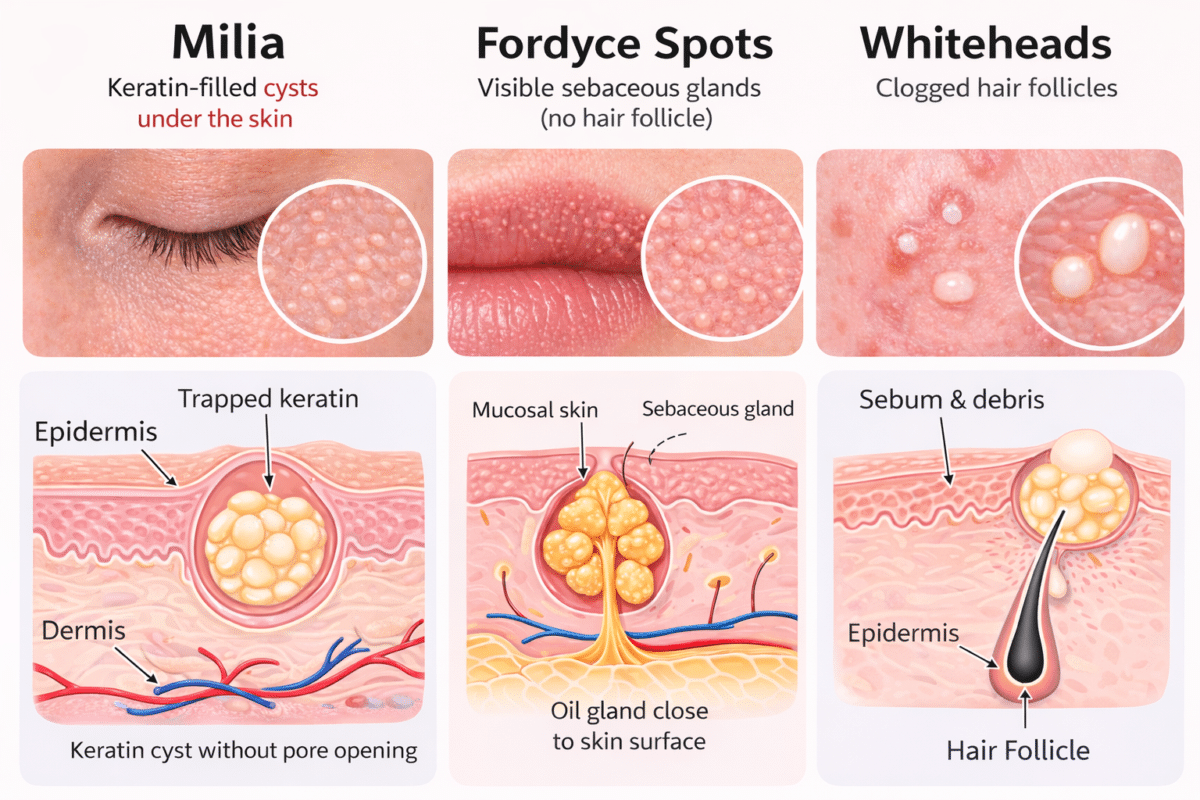
Unlike acne, whiteheads or milia, Fordyce spots are due to visible sebaceous (oil-producing) glands rather than blocked pores or keratin cysts. Sebaceous glands are normally present throughout the skin, where they help lubricate and protect its surface. In people with Fordyce spots, these glands sit closer to the surface on skin without hair follicles. This makes them appear as tiny bumps on the skin or mucosal surfaces.
Fordyce spots are usually white, cream, yellowish or skin-coloured and may appear in small clusters or as scattered dots. They are most commonly present on the lips, especially along the vermilion border, inside the cheeks and on genital skin. Fordyce spots can become more visible when you stretch the surrounding skin. They are a completely normal anatomical variant and totally benign, not infectious and not sexually transmitted. Although they are harmless and do not usually cause pain or discomfort, they can be very visible. This is especially true on the lips and genital skin. For that reason, some people seek treatment to reduce their appearance for cosmetic reasons.
What are the Types of Fordyce Spots?
Generally speaking, Fordyce spots are not usually classified into formal subtypes in the way some other lesions are. However, from a practical point of view, it is useful to think about them according to where they appear. This is because it affects diagnosis, management and how easy they are to treat. The most common locations for Fordyce spots are:
- Lips: Fordyce spots often appear along the vermilion border or inner lip as small pale dots. They are especially noticeable when you stretch the lip skin.
- Inside the mouth: Fordyce spots may occur on the inner cheeks or oral mucosa and are not usually noticeable to most people.
- Genital skin: Fordyce spots can appear on the penis, scrotum, vulva or labia. They are often mistaken for genital warts or other sexually transmitted infections.
What Causes Fordyce Spots?
Enlarged sebaceous glands cause Fordyce spots when they sit naturally close to the skin surface. There is no underlying infection and they are not something you catch from another person. In most cases, there’s no underlying cause because they’re just a normal variation of skin. As such, some people simply have more visible sebaceous glands than others. However, there are several factors that contribute to how visible they become, such as:
- Natural sebaceous gland anatomy: Fordyce spots develop when oil glands are located superficially and independently of hair follicles. This is the main reason they develop.
- Puberty and hormonal changes: They are often present early on but usually become larger and more noticeable from puberty onwards. This is because the sebaceous glands respond to increased androgen hormones.
- Oily skin: People with naturally oilier skin or more active sebaceous glands may notice Fordyce spots more easily.
- Thin skin or mucosal surfaces: Fordyce spots tend to be easier to see on areas like the lips and genitals. This is because the skin there is thinner and the glands show through more clearly.
How Do You Prevent Fordyce Spots?
Since Fordyce spots are a normal anatomical variation, you cannot prevent them completely. However, there are a few practical steps that can help reduce irritation, avoid making them more noticeable and prevent confusion with other skin conditions:
- Avoid Picking or Squeezing: Fordyce spots are not blocked pores and they do not contain trapped keratin like milia. Trying to squeeze them is unlikely to remove them and may lead to irritation, inflammation, scarring or post-inflammatory hyperpigmentation.
- Avoid Harsh Treatments: Strong acids, scrubs and essential oils can irritate delicate skin, especially on the lips and genitals. This may make the area look redder or more inflamed, which can actually make the glands more active. For the same reason, take care with retinoids and exfoliating acids. Avoid applying them too aggressively around the lips, inside the mouth or on genital skin.
- Get a Proper Diagnosis: Fordyce spots can look similar to other skin conditions like milia or whiteheads. For that reason, it is best to get a diagnosis first. This is even more important if the bumps are changing, painful, bleeding, ulcerated or unusual in appearance. It also matters for genital lesions because some sexually transmitted infections can initially resemble Fordyce spots.
Can You Get Rid of Fordyce Spots on Lips or Genitals?
Fordyce spots on the lips can be particularly frustrating because they are so visible. They often appear along the vermilion border and become more obvious when stretching the lip skin. Because the lips are a cosmetically sensitive area, aggressive treatment can easily backfire. If you are considering treatment for Fordyce spots on the lips, the first step is to confirm the diagnosis. You need to be sure they are actually Fordyce spots and not milia, cold sores, contact cheilitis or another lip lesion. Professional treatment such as laser or electrosurgery may help if the cosmetic concern is significant. However, you must weigh the risks of scarring, texture change and pigment change very carefully. At home, avoid trying to scrub, peel, squeeze or burn the spots off. This area is too delicate and you’ll likely just cause scarring and hyperpigmentation on the lips without getting rid of the Fordyce spots.
On the genital skin, Fordyce spots can cause a lot of anxiety because they are commonly mistaken for sexually transmitted infections. They may appear on the penile shaft, scrotum, vulva or labia and often present as small pale or yellow-white papules. Fordyce spots themselves are not contagious and are not an STI. The difficulty is that some STIs, particularly early genital warts, may initially resemble benign papules. That is why you should always get any new, changing or uncertain genital lesions properly diagnosed. If Fordyce spots on the genitals are confirmed and the issue is purely cosmetic, then there are treatment options like laser or electrosurgery. However, this requires a cautious approach as genital skin is delicate. Unnecessary procedures can leave scarring or pigment change which might look worse than the original spots.
What are the Best Treatments to Remove Fordyce Spots?
Although they may look like whiteheads or tiny cysts, Fordyce spots are enlarged visible oil glands. They are not superficial plugs that you can simply extract at home. This means that squeezing or cutting them yourself rarely works. You are more likely to cause inflammation, infection, scarring or pigment changes than to get rid of them. So you should seek professional advice to confirm that the bumps are actually Fordyce spots and not another lesion that needs a different type of treatment. In general, these are the most common and effective treatments that can help get rid of Fordyce spots:
- Electrosurgery: This professional treatment uses heat generated by electrical current to destroy the affected tissue. Although it can be very effective, results depend heavily on operator skill and the area undergoing treatment. Delicate skin increases the risk of irritation, scarring and post-inflammatory hyperpigmentation.
- Laser: Vaporising laser treatment, especially CO2 laser, can also help remove Fordyce spots. The advantage is precision, but lips and genital skin still require a very cautious approach because over-treatment can damage surrounding tissue.
- Micro-punch Surgery: This involves using a very small punch tool to remove the lesion. It can be useful for isolated or particularly bothersome spots, but still carries the risks of scarring, infection and hyperpigmentation.
- Cryotherapy: This destroys the affected tissue by freezing it and can be useful for some superficial Fordyce spots.
- Retinoids: Oral retinoids like Roaccutane can sometimes help manage widespread Fordyce spots because they shrink the sebaceous glands. However, they require a lengthy course of treatment and carry systemic side effects, so are not generally a first-line treatment. Topical retinoids like tretinoin can indirectly reduce the appearance of Fordyce spots. They smooth the surface of the skin and even out the colour. However, they do not “extract” or instantly remove the glands and results are variable.
Whilst Fordyce spots are harmless and do not require treatment, they can cause significant cosmetic concern, especially when they appear on the lips or genital skin. There are a few topical and procedural treatments that may help reduce their appearance. However, you should approach treatment cautiously to avoid leaving behind scars or pigment changes. Lastly, it’s worth bearing in mind that even when treatment works, recurrence can happen.
At City Skin Clinic, we believe that skincare is personal and should always centre around your needs. Our doctors offer custom topical skin treatments for conditions like acne, skin ageing and hyperpigmentation using ingredients like tretinoin, azelaic acid, hydroquinone and spironolactone where appropriate. If you are interested in a personalised skincare treatment please use our online skin consultation form or book a video consultation. Start your treatment journey today and take your first step towards great skin.
This article is intended for general informational purposes only and is not a substitute for medical advice, diagnosis or treatment. Always consult a qualified medical professional with any concerns about your skin or treatment options.


