A widow’s peak is one of the most distinctive hairline shapes you can have. This V-shaped point at the centre of the forehead has been associated with everyone from count Dracula to Hollywood stars. Famous widow peakers include Marilyn Monroe, Grace Kelly, John Travolta and Christian Bale. Despite being a completely normal genetic trait, a widow’s peak is one of the most common causes of hair concerns. That’s because it can sometimes look very similar to the early stages of a receding hairline. Knowing the difference between a natural widow’s peak and the beginning of pattern hair loss can save a lot of unnecessary stress. In this article, we explain what a widow’s peak is, what causes it and how it relates to hair loss. We’ll also review what you can do if your hairline is changing.
What is a Widow’s Peak?
Widow’s peak is a hairline that forms a distinct V-shaped or downward-pointing triangle at the centre of the forehead. Rather than running straight across or in a gentle curve, the hairline dips downward in the middle. This creates a pointed shape. The degree of prominence varies considerably from person to person. Some people have a very sharp and noticeable point whilst for others it is subtle and barely perceptible.
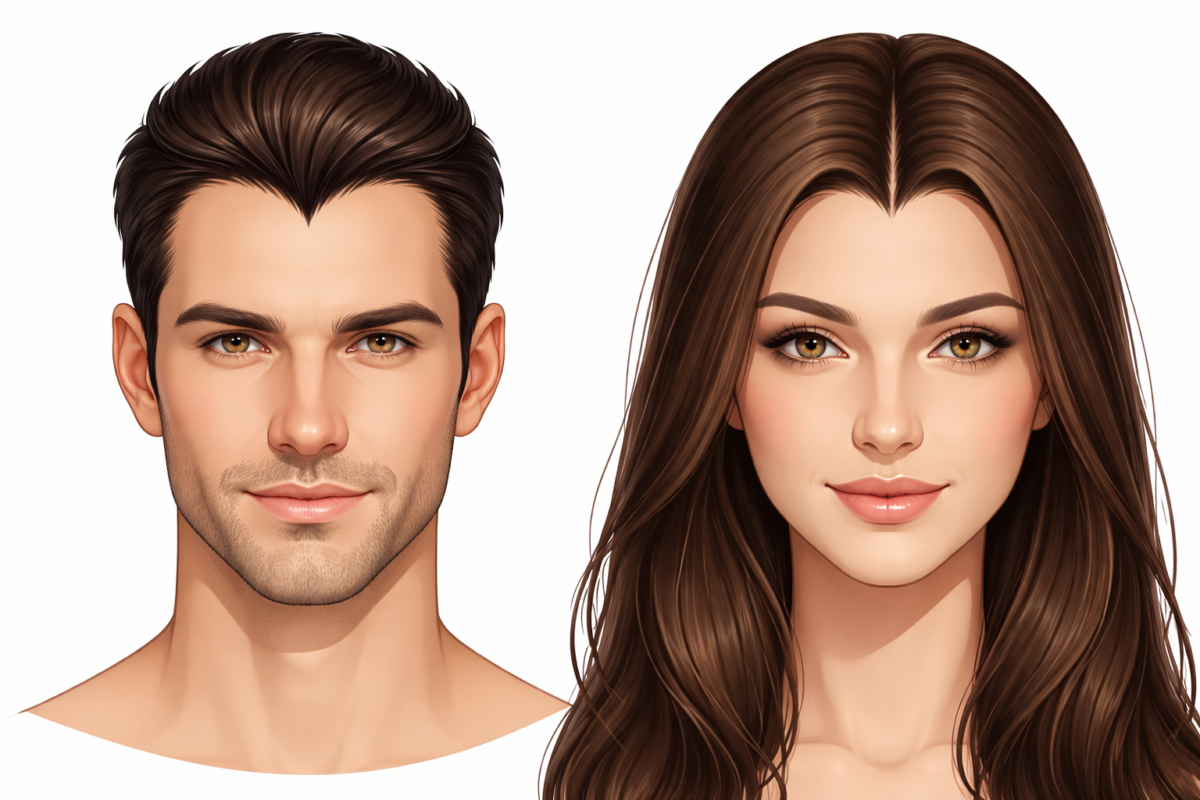
The term “widow’s peak” has its origins in folklore. It derives from the resemblance to the pointed hoods traditionally worn by widows in mourning during the 16th and 17th centuries. There was a superstitious belief that this hairline shape was an omen of early widowhood. More recently, the widow’s peak has become associated with distinctive characters in popular culture from Count Dracula to Eddie Munster. Despite these dramatic associations, a widow’s peak is simply a normal variation in human hairline shape. In fact you can find it in roughly 30 to 37% of the population.
What Causes a Widow’s Peak?
The genes you inherit from your parents largely determine the shape of your hairline. Current thinking suggests that the genetics of hairline shape are more complex. So it’s likely that it involves multiple genes rather than a single one. This means it is possible for parents without widow’s peaks to have children who have them and vice versa.
The biological explanation for why some have a widow’s peak relates to how hair grows on the forehead during development. Hair growth on the forehead is suppressed by bilateral periorbital fields (areas around the eyes that inhibit hair growth). A widow’s peak forms when the point where these two fields meet on the forehead sits lower than usual. This allows hair to grow further down in the centre. This creates the characteristic V-shape. In the vast majority of cases, a widow’s peak is simply a harmless genetic feature. It’s a bit like dimples, freckles or attached earlobes. However, in rare cases, a prominent widow’s peak can be a sign of an underlying genetic syndrome. The conditions include Aarskog syndrome, Donnai-Barrow syndrome, Waardenburg syndrome and frontonasal dysplasia. These involve a range of other physical features and developmental differences. So, a widow’s peak alone is not a cause for concern.
Is a Widow’s Peak a Sign of Hair Loss?
This is the question that worries most people and the short answer is no. A natural widow’s peak is not a sign of hair loss and having one does not increase your likelihood of developing androgenetic alopecia (pattern hair loss). The genes that determine your hairline shape are different from the genes that influence susceptibility to DHT-driven hair loss. So having a widow’s peak does not mean you are more likely to develop balding than someone with a straight hairline.
That said, the confusion between a widow’s peak and early hair loss is understandable. When male pattern hair loss begins, it typically starts with recession at the temples. As the temples thin and recede, the central portion of the hairline can appear to be left behind. This creates a shape that looks remarkably like a widow’s peak. In fact, many men who think they are developing a widow’s peak later in life may actually be experiencing the early stages of a receding hairline. This is a key distinction because a natural widow’s peak is something you are born with or develop in early childhood. A “widow’s peak” that appears or becomes more pronounced in your twenties or thirties is more likely to be the result of temple recession.
How Can you Tell If Your Widow’s Peak is Natural or a Sign of Recession?
Distinguishing between a lifelong widow’s peak and one that is forming due to hair loss is important. Here are the key things to look for:
- Have you always had it? The most reliable way to tell is simply whether your hairline has always been this shape. Look at childhood or teenage photographs. If you’ve had the same V-shaped hairline for as long as you can remember, it is almost certainly a natural genetic feature and nothing to worry about. If the V-shape has appeared or become significantly more pronounced in recent years, this is more suggestive of temple recession.
- Is the shape stable or changing? A natural widow’s peak stays the same throughout adult life. It doesn’t deepen, widen or shift position from year to year. If you’re noticing that the V-shape is becoming sharper or more exaggerated over time, particularly if the temples are moving backwards, this suggests active hair loss rather than a static genetic trait. Comparing photographs taken over several years is the best way to assess this.
- What does the hair at the temples look like? With a natural widow’s peak, the hair at the temples and along the entire hairline is thick, healthy and of a consistent quality. If the hair at the temples is becoming finer, shorter, lighter in colour or wispy in comparison to the hair elsewhere, it may be due to follicular miniaturisation. This is the hallmark of androgenetic alopecia and a clear indicator that the widening V-shape is due to hair loss rather than natural hairline shape.
- Is there thinning elsewhere? A natural widow’s peak only affects the shape of the front hairline. The rest of the scalp is completely fine. If you are also noticing thinning at the crown, a widening part line or an overall reduction in hair density, this points to pattern hair loss.
- What is your family history? If male pattern hair loss runs in your family, particularly among your father, grandfather or maternal uncles, and you are noticing changes to your hairline, there ay be a link. A family history of hair loss makes it more likely that your increasingly prominent widow’s peak is being driven by temple recession rather than genetics alone.
Can You Get Rid of a Widow’s Peak?
If you have a natural widow’s peak that isn’t caused by hair loss, there is no medical reason to treat it. However, some people feel self-conscious about it and want to change its appearance. There are a number of cosmetic approaches that can help minimise or disguise a widow’s peak:
- Hairstyles such as a side parting, fringe, slicked back style or textured crop can effectively conceal the V-shape.
- Temporary hair removal methods such as tweezing, waxing or threading can reshape the hairline. However. these need to be maintained regularly as the hair will grow back.
- Electrolysis or laser hair removal can offer a more long-term solution. However these should be approached carefully and ideally discussed with a dermatologist to avoid an unnatural-looking result or post-inflmamatory hyperpigmentation.
What if Your Widow’s Peak is Getting Worse?
If your widow’s peak is becoming more pronounced and you suspect it is due to hair loss, the most important thing is to act early. The earlier hair loss is addressed, the better the outcomes tend to be. There are a number of effective treatments for pattern hair loss that can slow recession and in many cases promote regrowth:
- Minoxidil: This is the first-line treatment for most people with pattern hair loss. It works by improving blood flow to the scalp and prolonging the anagen (growth) phase of the hair cycle. Available as a topical solution, foam or in oral form, it can help stabilise a receding hairline and promote regrowth of finer hairs.
- DHT blockers: Finasteride and dutasteride work by blocking DHT, the hormone responsible for follicle miniaturisation. These are among the most effective treatments for slowing and reversing temple recession, though they carry important side effects that need careful consideration. They are available in both oral and topical forms.
- Combination therapy: Combining minoxidil with a DHT-blocker or spironolactone alongside adjuncts like tretinoin, melatonin or caffeine can target hair loss from multiple angles. This is generally more effective than any single treatment alone. Supporting procedures like microneedling and LLLT can also further enhance results.
- Hair transplant surgery: For those with more advanced temple recession where medical treatment alone has not produced sufficient coverage, a hair transplant can permanently restore the hairline. However, it is generally recommended to stabilise hair loss with medical treatment first to ensure the best long-term outcome. Hair transplants can also help if you don’thave hair loss but are unhappy with your widow’s peak hairline.
A widow’s peak is a perfectly normal genetic hairline shape that affects roughly a third of people in the world. On its own, it is not a sign of hair loss and does not increase your risk of developing baldness. However, because temple recession from pattern hair loss can mimic or exaggerate the appearance of a widow’s peak, it’s worth understanding the difference. The key is whether the shape has always been there or is something that has developed or worsened over time. If your widow’s peak is stable and you’ve had it since you were young, there’s nothing to worry about. If it’s new, deepening or accompanied by thinning elsewhere, it may be best to seek advice in case it requires treatment.
We believe in a personalised approach to hair care which is why we offer custom hair loss treatments for women and men through our online skin clinic. Our doctors create custom hair growth serums using actives such as Minoxidil, Finasteride, Dutasteride, Spironolactone, Melatonin, Caffeine and Tretinoin where appropriate for each and every patient. Start your virtual consultation and begin your journey to great hair today.
This article is intended for general informational purposes only and is not a substitute for medical advice, diagnosis or treatment. Always consult a qualified medical professional with any concerns about your hair or treatment options.


