Wherever you look these days, someone seems to be singing the virtues of Retinoid creams. And for good reason, because topical Retinoids are among the most potent ingredients in all of skincare. Yet they are also among the most misunderstood. This article sets out exactly what Retinoid creams are, what they do and how to use them properly. It also explains the difference between over-the-counter (OTC) Retinoids and the prescription-only kind.
What Exactly are Retinoid Creams & How Do They Work?
Retinoid creams are topical treatments derived from vitamin A, with decades of research behind their benefits for the health and appearance of skin. Their effects are remarkably wide-ranging, from skin ageing and acne to hyperpigmentation and rough texture or scars. They work by penetrating the skin to speed up exfoliation and cell renewal, boost collagen and improve blood supply. The result is smoother, brighter, clearer and more youthful skin.
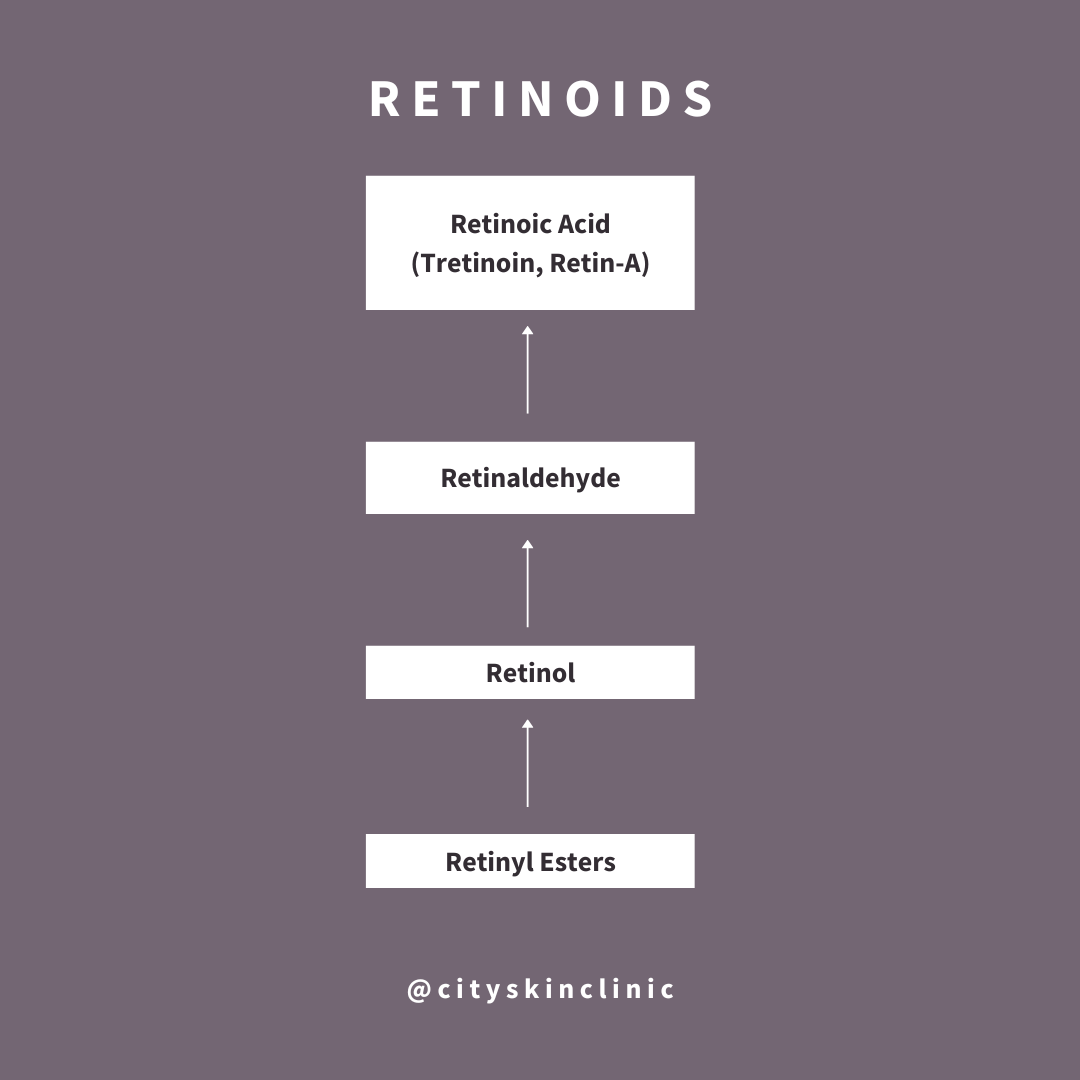
There is a great deal of confusion about what a Retinoid cream actually is, with clever marketing often implying the word means something stronger. In truth, the term Retinoid simply describes any derivative of Retinol, which is vitamin A in its simplest form. It is an umbrella term covering many compounds, from Retinyl esters and Retinaldehyde right through to retinoic acid (tretinoin) and tazarotene. They come as serums or creams, in both OTC formulations and stronger prescription options. That sheer range of types and strengths is exactly what lets them suit so many skin types and concerns.
Over-the-Counter Retinoids
The UK, like the rest of the world, offers a vast choice of over-the-counter Retinoid creams. These are a milder, more accessible counterpart to prescription Retinoids like tretinoin. They offer a gentler way into (or alternative to) the transformative benefits of vitamin A. Typically built around ingredients like Retinol and Retinyl palmitate, they are designed to improve skin texture, tone and the appearance of fine lines gradually.
Retinoids sit within a nuanced hierarchy, from the mildest OTC options to potent prescription-strength formulas. Each strikes its own balance of efficacy and irritation. At the gentlest end are the Retinyl esters, such as Retinyl palmitate, well suited to sensitive skin or Retinoid beginners. A step up is Retinol, a more direct form of vitamin A. Higher still are the Retinaldehydes, better known as Retinal, which act more powerfully on skin renewal and so work faster. Retinal is about as strong as over-the-counter Retinoids get.
OTC Retinoid creams and serums are ideal if you are new to Retinoids or have very sensitive skin. They let you enjoy the anti-ageing, acne-fighting, smoothing and brightening powers of vitamin A with less risk of irritation. They are also widely available in pharmacies, beauty stores and online, at every budget.
Prescription Topical Retinoid Creams in the UK
At the top of the Retinoid hierarchy sit the prescription options, available in the UK as creams or gels and including adapalene, tretinoin and tazarotene. These are the most potent and most effective against severe acne and deep wrinkles. But they carry a higher risk of irritation and side effects if used incorrectly. That is why they are prescription-only in the UK and best used under medical guidance. Adapalene is the gentlest and is often chosen for sensitive skin or as a starting point. Tretinoin is the most widely used, stronger than adapalene but less irritating than tazarotene, the strongest of the three.
From gentlest to strongest, here is how the Retinoid family compares:
| Retinoid | Availability | Relative strength |
|---|---|---|
| Retinyl esters (e.g. Retinyl palmitate) | Over the counter | Gentlest |
| Retinol | Over the counter | Mild |
| Retinal (Retinaldehyde) | Over the counter | Strongest OTC option |
| Adapalene | Prescription (UK) | Gentlest prescription |
| Tretinoin (Retin-A) | Prescription (UK) | Strong |
| Tazarotene | Prescription (UK) | Strongest |
How to Choose the Right Retinoid for You
Choosing the right Retinoid cream matters. The best choice depends on your skin type, concerns, budget and experience with active skincare. OTC Retinoid creams, gels and serums offer plenty of choice and are easy to find on the high street and online. That makes them a great way to introduce actives or Retinoids into your routine. If your skin is sensitive, opt for a gentler Retinoid. Always begin at a low strength and frequency to avoid irritation and the side effects we cover below. This “low and slow” approach matters even more for skin of colour, where irritation can trigger post-inflammatory hyperpigmentation.
If you are dealing with concerns like acne or hyperpigmentation, it is worth seeing a dermatologist or aesthetic doctor. They may recommend prescription Retinoids or other treatments. For conditions like rosacea, psoriasis or eczema, they can help you ease into Retinoids gently or suggest alternatives like azelaic acid. Prescription Retinoids like tretinoin are generally available either through private doctors or online skin telemedicine platforms in the UK.
How to Use Retinoid Creams in Your Skincare Routine
Working Retinoid creams into your routine is straightforward, but it rewards a little care and patience. Success really comes down to the right application technique and steadily building tolerance.
- Choose Wisely: Opt for a low-strength product and build up gradually. If your skin is sensitive or new to actives, start with gentler Retinyl esters.
- Safety First: Always patch test for 24 hours to check for any reaction.
- Less is More: A pea-sized amount of Retinoid cream, gel or serum is enough for the whole face, and less again for the neck.
- Start Slowly: Begin once or twice a week, increasing the frequency by one night every 1 to 2 weeks as your skin builds tolerance.
- Use at Night: Retinoids do their best work overnight and are sensitive to light.
- Apply to Clean, Dry Skin: After cleansing, dry the skin thoroughly before applying to reduce the risk of irritation.
- Follow with Moisturiser: To offset dryness, apply a simple moisturiser over the Retinoid.
- Sandwich if You Need To: Apply a thin layer of moisturiser, then the Retinoid, then another layer of moisturiser to buffer sensitive skin from irritation.
- Sun Protection is Mandatory: Retinoids leave skin more vulnerable to the sun, so wear a broad-spectrum sunscreen of at least SPF 30 during the day.
- Avoid Mixing with Other Actives: Do not apply Retinoids at the same time as potent actives like vitamin C or AHAs and BHAs, to prevent irritation.
- Be Patient: Visible improvements can take several weeks to months.
- Monitor Your Skin’s Response: Watch how your skin reacts and adjust frequency or formulation accordingly. If irritation persists, stop and seek advice.
Safety & Risks
Used properly, Retinoids can transform skin texture, even out tone, soften signs of ageing and keep acne in check. They are potent, though, so they can cause side effects if used incorrectly, and they are not suitable for everyone. The main considerations:
- Increased Sun Sensitivity: Retinoids thin the skin’s outer layer and raise its sensitivity to sunlight, which increases the risk of sunburn. Daily sunscreen is therefore essential.
- Skin Irritation: Redness, peeling, dryness and irritation are common, especially early on or at higher concentrations.
- Pregnancy Risks: Vitamin A can cause birth defects, prescription forms like isotretinoin (Roaccutane) especially. No Retinoid, including OTC ones, is safe to use during pregnancy.
- Interaction with Other Products: Pairing Retinoids with other potent actives can worsen irritation. Introduce things like high-strength vitamin C, benzoyl peroxide or AHAs and BHAs one at a time, and use them mindfully.
- Skin Injuries: Too high a strength, or building up too quickly, can damage the skin barrier, leading to sensitivity, dehydration and even chemical burns.
Retinoid creams, serums and gels can earn a place in almost any routine. They are widely available, hugely varied and capable of real results. That said, there is no such thing as a miracle ingredient, and results take time, consistency and patience. Whilst Retinoids are generally safe, it pays to respect their potential risks and side effects. The way to set yourself up for success is to start low and slow, then build up as your skin adapts. And if your concerns are significant, your goals ambitious or your skin already troubled, it is worth consulting a medical professional. They can advise whether a prescription treatment might suit you better.
At City Skin Clinic, we are passionate about personalised skin and hair care. We offer safe and effective custom treatments using ingredients like tretinoin, azelaic acid, hydroquinone, niacinamide and spironolactone where appropriate through our online clinic. Our doctors treat acne, hyperpigmentation, melasma, rosacea and skin ageing through bespoke compounded treatments designed around you. To start your personalised plan, book a virtual video consultation or use our online consultation form. The journey towards great skin and hair starts here.
This article is intended for general informational purposes only and is not a substitute for medical advice, diagnosis or treatment. Always consult a qualified medical provider for any health concerns or questions you might have.


